Tutorial: Lakehouse editor
CSA Loom
lakehouseeditor — verified working against a live console by the UAT harness on 2026-07-01.
Open the editor
- Sign in to your CSA Loom Console (for example
https://<your-console-host>). - Open or create a workspace from the Workspaces page.
- Click + New item and choose Lakehouse from the catalog.
- The editor opens at
/items/lakehouse/<id>:
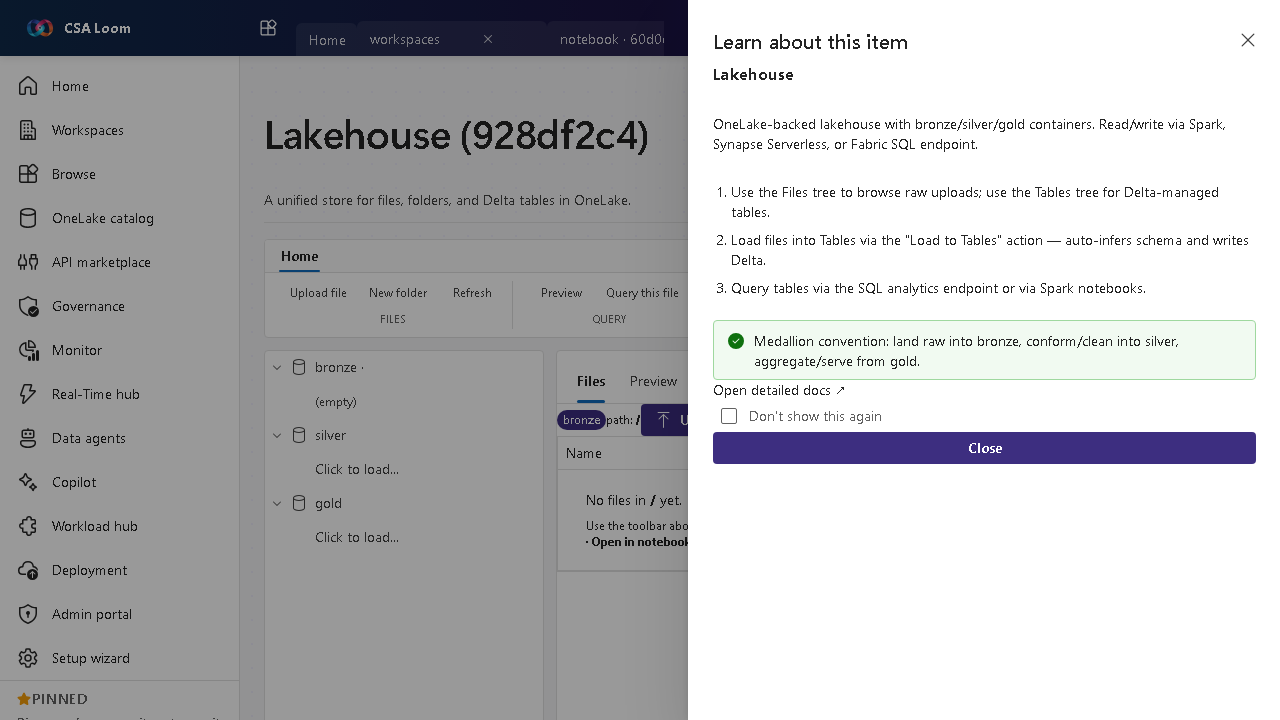
What this editor does
A Lakehouse is the unified store for files and Delta tables. In Loom it is Azure-native: storage rides on ADLS Gen2 (Delta) with a Synapse serverless SQL analytics endpoint and Spark for query — no Microsoft Fabric or OneLake required. Use it as the bronze/silver/gold landing zone for any analytics workload. (An OneLake-backed lakehouse is opt-in only, never the default.)
Getting started
- Browse Files vs Tables — The Files tree shows raw uploads on ADLS Gen2; the Tables tree shows Delta-managed tables. Drop raw data into Files, then promote it into Tables.
- Load files to tables — Use the Load to Tables action to auto-infer schema and write a managed Delta table — no DDL required.
- Query via SQL or Spark — Hit the SQL analytics endpoint for T-SQL, or read Delta directly from a Notebook with spark.read.format('delta').
- Follow the medallion convention — Land raw into bronze, conform and clean into silver, aggregate and serve from gold so downstream items have a stable contract.
Learn more
- Microsoft Learn reference: https://learn.microsoft.com/fabric/data-engineering/lakehouse-overview
Verified by the UAT harness
- Tested at:
2026-05-26T13:50:36.908Z - Verdict: A (renders cleanly, real backend responded)
- Test source:
apps/fiab-console/e2e/editors.uat.ts