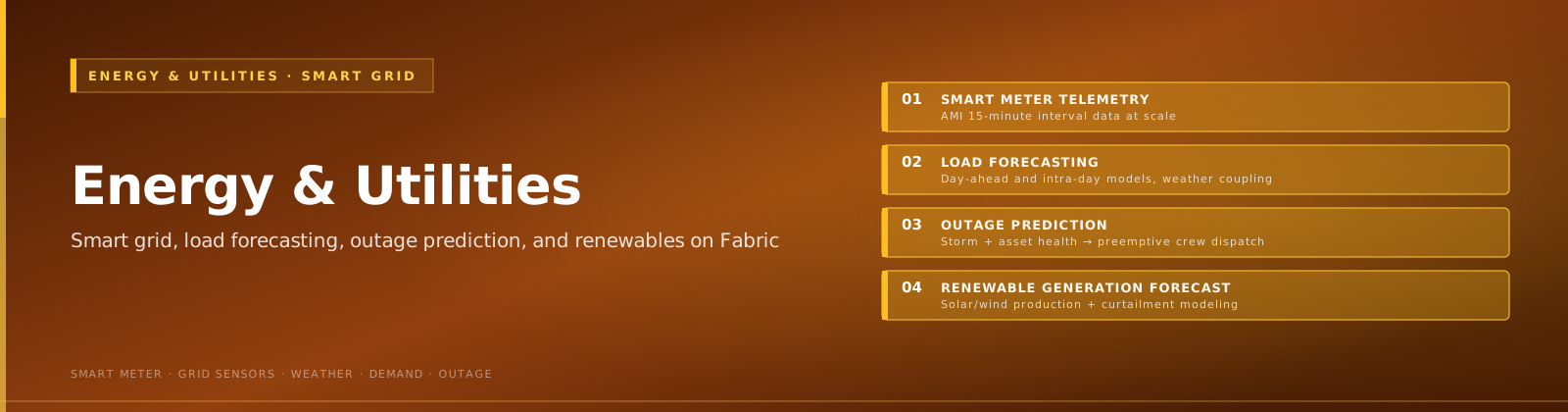
⚡ Energy & Utilities — Smart Grid Analytics & Renewable Forecasting¶ Feature
Grid-scale analytics, outage prediction, and NERC CIP compliance on Microsoft Fabric



Last Updated: 2026-05-05 | Version: 1.0.0
"The modern grid generates terabytes of AMI, SCADA, and weather data daily — the utilities that turn that data into real-time decisions will lead the energy transition."
🎯 Scenario Overview
| Scenario | Fabric Pattern | Latency Target | Key Features |
|---|---|---|---|
| Smart meter (AMI) analytics | Eventstream → Eventhouse + Lakehouse Bronze | < 15 sec | RTI, Medallion Architecture |
| Outage prediction & restoration | Gold feature store + AutoML classification model | 15-min intervals | AutoML, Data Activator |
| Renewable generation forecasting | Lakehouse Gold + AutoML time-series model | Hourly | AutoML, Semantic Link |
| Grid digital twin | Digital Twin Builder with SCADA binding | < 5 sec | Digital Twin Builder, RTI |
| Regulatory compliance reporting | Warehouse star schema + Direct Lake | Monthly/Quarterly | Warehouse Setup, Direct Lake |
| Vegetation management (wildfire risk) | Lakehouse Gold with geospatial + weather overlays | Daily | Maps in Fabric, Medallion Architecture |
📋 Regulatory Landscape
| Framework | Applicability | Fabric Controls |
|---|---|---|
| NERC CIP (Critical Infrastructure Protection) | Bulk electric system cyber assets and electronic security perimeters | Network Security managed private endpoints, Outbound Access Protection, RBAC |
| FERC Order 2222 | Distributed energy resource aggregation and market participation | Lakehouse Gold aggregation layer for DER portfolio analytics |
| EPA Clean Air Act / GHGRP | Greenhouse gas reporting for fossil generation | SQL Audit Logs for emissions data lineage, Data Governance |
| DOE Cybersecurity Capability Maturity Model (C2M2) | Cybersecurity practices for energy subsector | Zero Trust Blueprint, Monitoring |
| State PUC Reliability Standards | SAIDI/SAIFI/CAIDI performance metrics | Gold-layer reliability KPIs with Direct Lake dashboards |
🏗️ Data Flow Architecture
flowchart LR
    subgraph Sources["⚡ Data Sources"]
        AMI["Smart Meters<br/>(AMI Head-End)"]
        SCADA["SCADA / DCS<br/>(OPC UA)"]
        WX["Weather<br/>Services API"]
        GIS["GIS Asset<br/>Registry"]
        MKT["Energy Market<br/>(ISO/RTO Feeds)"]
    end

    subgraph Bronze["🥉 Bronze Layer"]
        B1["Meter Reads<br/>(Eventstream)"]
        B2["SCADA Telemetry<br/>(Eventstream)"]
        B3["Weather Forecasts<br/>(hourly API pull)"]
        B4["Asset Geometry<br/>(GIS export)"]
        B5["Market Prices<br/>(append-only)"]
    end

    subgraph Silver["🥈 Silver Layer"]
        S1["Meter Intervals<br/>(validated, gap-filled)"]
        S2["Grid Telemetry<br/>(downsampled)"]
        S3["Weather Grid<br/>(normalized)"]
        S4["Asset Master<br/>(enriched)"]
    end

    subgraph Gold["🥇 Gold Layer"]
        G1["Load Forecasting<br/>Feature Store"]
        G2["Outage Risk<br/>Scores"]
        G3["Renewable<br/>Generation KPIs"]
        G4["Reliability<br/>(SAIDI/SAIFI)"]
    end

    subgraph BI["📊 Consumption"]
        DTB["Digital Twin<br/>Builder (Grid)"]
        EVH["Eventhouse<br/>(real-time KQL)"]
        DL["Direct Lake<br/>Semantic Model"]
        PBI["Power BI<br/>Dashboards"]
        DA["Data Activator<br/>Outage Alerts"]
    end

    AMI --> B1
    SCADA --> B2
    WX --> B3
    GIS --> B4
    MKT --> B5

    B1 --> S1
    B2 --> S2
    B3 --> S3
    B4 --> S4
    B5 --> S1

    S1 --> G1
    S1 --> G4
    S2 --> G2
    S3 --> G1
    S3 --> G3
    S4 --> G2

    G1 --> DL --> PBI
    G2 --> DL
    G3 --> DL
    G4 --> DL
    B2 --> EVH --> DTB
    G2 --> DA
💡 Why Fabric for Energy and Utilities
Scale to billions of meter reads without custom infrastructure. AMI head-end systems generate 96+ interval reads per meter per day. Eventstreams ingest this volume directly into Eventhouse for real-time analytics and Lakehouse Bronze for historical analysis — no Hadoop clusters or custom Kafka consumers required.
Grid digital twin built on the analytics platform. Digital Twin Builder models substations, feeders, and distributed energy resources with real-time SCADA binding, enabling operators to visualize grid state in Eventhouse KQL dashboards alongside historical trends.
Outage prediction with built-in ML. AutoML trains classification models on weather, vegetation, asset age, and historical outage data, scoring feeder-level risk every 15 minutes and triggering Data Activator alerts for proactive crew dispatch.
NERC CIP compliance without bolt-on tools. Managed private endpoints, customer-managed keys, identity-based RBAC, and SQL audit logs provide the access control, encryption, and audit evidence that NERC CIP standards require — all native to Fabric.
Renewable forecasting at Direct Lake speed. Wind and solar generation predictions run through AutoML time-series models and surface in Direct Lake Power BI dashboards, giving dispatchers sub-second access to generation-vs-load balance metrics.
🚀 Getting Started
- Ingest AMI and SCADA data — Configure Eventstreams to pull meter reads and SCADA telemetry into Eventhouse and Lakehouse Bronze.
- Build the medallion Lakehouse — Follow Medallion Deep Dive for meter, asset, weather, and market data.
- Apply NERC CIP controls — Enable Network Security private endpoints, CMK, and RBAC aligned to CIP-004/005/007.
- Model the grid — Use Digital Twin Builder to create substation and feeder entities with live SCADA binding.
- Deploy outage prediction — Train classification models via AutoML and wire Data Activator for proactive alerts.
- Build reliability dashboards — Create SAIDI/SAIFI/CAIDI reports with Direct Lake over Gold reliability tables.
📚 References
| Resource | Link |
|---|---|
| Real-Time Intelligence | RTI Guide |
| Digital Twin Builder | DTB Guide |
| Direct Lake connectivity | Direct Lake Guide |
| AutoML Model Endpoints | AutoML Guide |
| Network Security | Network Security |
| Maps in Fabric | Maps Guide |
| Capacity Planning | Capacity Guide |
| BCDR | Disaster Recovery |