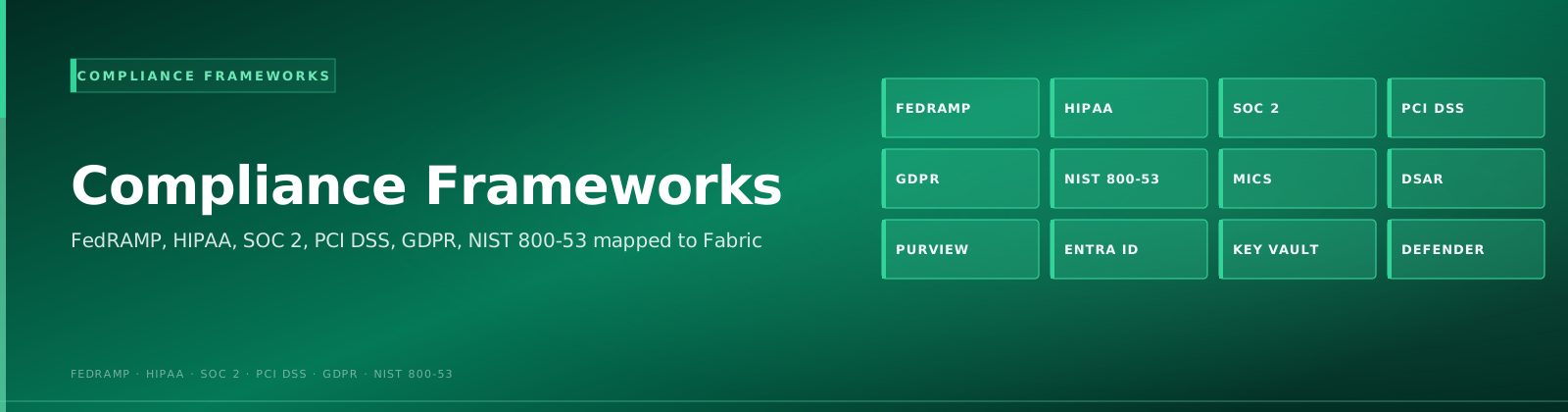
🏛️ Compliance Framework Mappings for Microsoft Fabric
Enterprise Compliance Controls Mapped to Microsoft Fabric Implementations



Last Updated: 2026-05-05 | Version: 1.0.0
🎯 Overview
This section provides detailed control-mapping documentation for six major compliance frameworks as they apply to Microsoft Fabric deployments. Each guide maps individual framework controls to specific Fabric features, configurations, and operational procedures — giving security and compliance teams a concrete, auditable reference for regulatory readiness.
All guides follow a consistent structure:
- Framework overview and applicability to Fabric workloads
- Control mapping table with Control ID, Name, Fabric Implementation, and Evidence
- Shared responsibility model — what Microsoft owns vs. what the customer must configure
- Gap analysis — current Fabric limitations and compensating controls
- Implementation checklist — actionable steps to achieve compliance
- Cross-references to existing best-practices documentation
📋 Compliance Frameworks
-
NIST 800-53
Federal information security controls (AC, AU, CM, IA, SC, SI families) mapped to Fabric capabilities. Required for federal agencies and FedRAMP-authorized systems.
-
FedRAMP
Fabric's path to FedRAMP authorization, current certification status, gap analysis, and compensating controls for government cloud deployments.
-
HIPAA
Protected Health Information (PHI) handling in Fabric — BAA requirements, encryption, audit trails, and minimum necessary access controls.
-
SOC 2
Trust Service Criteria (Security, Availability, Processing Integrity, Confidentiality, Privacy) mapped to Fabric platform and customer controls.
-
PCI DSS
Cardholder data environment (CDE) controls in Fabric — network segmentation, encryption, access controls, and logging for payment card data.
-
GDPR
EU data protection requirements — data subject rights, data residency, right to deletion in OneLake, lawful basis for processing, and DPIAs.
🔗 Shared Responsibility in Fabric
All six frameworks share a common responsibility model when deployed on Microsoft Fabric:
| Layer | Microsoft Responsibility | Customer Responsibility |
|---|---|---|
| Physical Infrastructure | Datacenter security, hardware, network backbone | N/A |
| Platform Services | Fabric runtime, OneLake storage encryption at rest, OS patching | N/A |
| Identity & Access | Entra ID infrastructure, MFA platform | RBAC configuration, workspace roles, sensitivity labels |
| Data Protection | Platform-managed encryption (MMK), TLS in transit | CMK configuration, data classification, DLP policies |
| Monitoring & Audit | Platform audit log generation | Log collection, SIEM integration, alert configuration |
| Governance | Purview platform availability | Policy definition, lineage tracking, catalog curation |
| Compliance Posture | Attestations (SOC 2, ISO 27001, FedRAMP) | Control implementation, evidence collection, audit response |
📚 Related Best-Practices Documentation
These compliance mappings reference the following best-practices guides throughout:
| Best Practice Guide | Relevance |
|---|---|
| Customer-Managed Keys | Encryption at rest with customer-controlled keys |
| SQL Audit Logs Compliance | Audit trail configuration and retention |
| Identity & RBAC Patterns | Access control and role assignment |
| Network Security | Network isolation, private endpoints, firewall rules |
| Outbound Access Protection | Data exfiltration prevention |
| Data Governance Deep Dive | Purview integration, lineage, classification |
| Monitoring & Observability | Operational monitoring and alerting |
| Disaster Recovery & BCDR | Business continuity controls |
| Testing Strategies | Compliance testing approaches |
| Data Sharing & Federation | Cross-boundary data sharing controls |
🏗️ How to Use These Guides
- Identify applicable frameworks based on your industry and regulatory requirements
- Review the control mapping tables to understand which Fabric features satisfy each control
- Check the shared responsibility model to understand your obligations vs. Microsoft's
- Review the gap analysis to identify controls requiring compensating measures
- Follow the implementation checklist to configure Fabric for compliance
- Collect evidence using the evidence column in mapping tables for audit readiness
For questions about compliance posture, contact your organization's compliance team or Microsoft account representative.